XINGYI Cable Sleeving Installation and Dimensional Inspection Reference
Workshop checks for PET braided and self-wrapping sleeves, including bundle measurement, ends and route clearance.
Need help selecting? Send photos of the model, nameplate and installation; quantity may be unknown.
Identify the sleeve and the cable assembly
This reference covers the six XINGYI protective sleeving models listed below. Use it to prepare cutting, installation and inspection instructions for a defined cable assembly. Identify the model and bundle dimensions before beginning work; similar-looking braided sleeves can have different diameter ranges and installation arrangements.
Place the equipment in its specified maintenance condition and identify the cables affected by the work. Keep connectors and cable labels accessible during fitting. Follow the approved cable assembly instructions when disconnecting, rerouting or terminating a cable.
Dimensional reference
| Model | Construction | Nominal diameter (mm) | Bundle diameter range (mm) | Unwrapped width (mm) |
|---|---|---|---|---|
| XY-BS-0001 | PET monofilament braid | 6 | 3–9 | — |
| XY-BS-0002 | PET monofilament braid | 10 | 7–19 | — |
| XY-BS-0003 | PET monofilament braid | 16 | 10–27 | — |
| XY-SW-0001 | Self-wrapping braid | — | 8–9 | 40 ± 2 |
| XY-SW-0002 | Self-wrapping braid | — | 19–20 | 98 ± 2 |
| XY-SW-0003 | Self-wrapping braid | — | 25–27 | 128 ± 2 |
The XY-BS models are PET monofilament braid. The XY-SW models use self-wrapping braided construction. Use the stated diameter ranges for the bundle check. The self-wrapping widths describe the material when unwrapped; they are not alternative bundle diameters or finished circular dimensions.
Measure before cutting
Measure the bundle at representative locations, including the widest straight section and transitions near branches. Record the route and required coverage, then trial the selected sleeve on the actual arrangement. Establish the production cut length from the installed condition and the specified end treatment rather than relying only on a loose sample laid beside the cable.
For tubular braid, confirm that the planned installation path accommodates the connector and termination geometry. For self-wrapping construction, check that side access is available along the intended route and that the sleeve can close correctly around each relevant section.
Fit with controlled handling
Apply the sleeve using the assembly's approved installation method. Support the cable bundle so that fitting does not pull on connector contacts or terminals. Work around branches in the sequence defined for the assembly and keep the sleeve clear of identification markings that need to remain readable.
Inspect the material as it is fitted. Stop if a connector catches, the bundle is forced out of its planned shape or the material is damaged. Correct the installation approach before continuing. Do not use the fitted sleeve to pull a cable assembly through an obstructed route.
Finish and inspect the ends
Use the approved cutting and end-securing method for the selected sleeve and cable assembly. Check both ends for loose strands, unintended gaps and interference with adjacent parts. Verify that the end treatment does not damage the cable jacket or obstruct the connector's intended movement and access.
On self-wrapping installations, inspect the closure over the complete covered length, including bends and transitions. On tubular braid, inspect the fitted coverage and the transition at each end. If the bundle diameter changes beyond the selected range, review the sleeve arrangement rather than forcing the fit.
Verify the complete route and record it
Check the installed route against the machine drawing. Inspect clearances to edges, moving components and cable supports. Where the cable assembly moves, perform the machine's controlled movement check and look for migration, snagging or contact at the sleeve ends.
Record the model, measured bundle dimensions, installed cut length, end treatment and inspection result. Retain that record for replacement work. Recheck the sleeve whenever cables are added or the route changes, and replace damaged material using the approved assembly specification before returning the affected equipment to normal operation.
Browse the XINGYI category and product details to compare the listed models and prepare your dimensional enquiry.
Need help selecting? Send photos of the model, nameplate and installation; quantity may be unknown.
Related reading
Choosing XINGYI Cable Sleeving: Expandable PET Braid or Self-Wrapping Construction
Compare six sleeve models by bundle diameter, access method and installed routing needs.
Read article →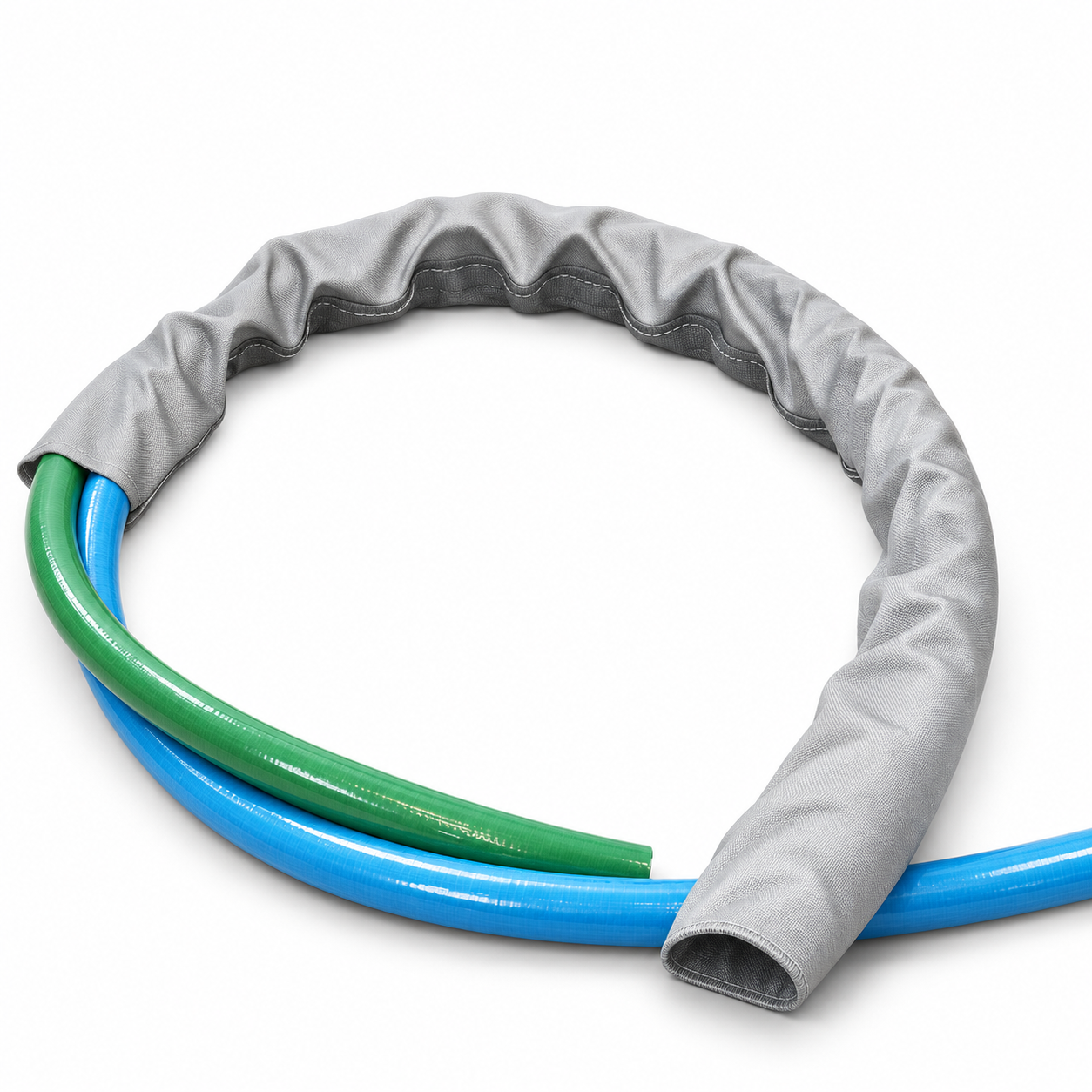
Selecting a Robot Cable Protection Sleeve: Fit, Closure and Exposure
Choose a sleeve for the existing bundle and the actual wear mechanism. Separate abrasion, spatter and flame requirements, and use the enquiry checklist to define the scope.
Read article →Robot Cable Sleeves: Why Overlap, Closure and Attachment Control Wear
Examine how a wrap moves through a bend, why damage often starts at its ends, and how to separate abrasion, flame and spatter claims.
Read article →