How to Specify a Robot Protective Cover for Washing or Painting
Match the cover to the full robot variant, process exposure and working movement. Use the application comparison and quotation checklist to define fabric, seams, closures and service access.
Need help selecting? Send photos of the model, nameplate and installation; quantity may be unknown.
A robot protective cover is a fitted barrier around selected parts of the robot body. To specify one, describe both the equipment and what reaches it: cleaning fluid, paint overspray, temperature, spray direction and operating movement. A robot model and a photograph are useful identification inputs, but they do not define the complete cover.
Decide what needs protection
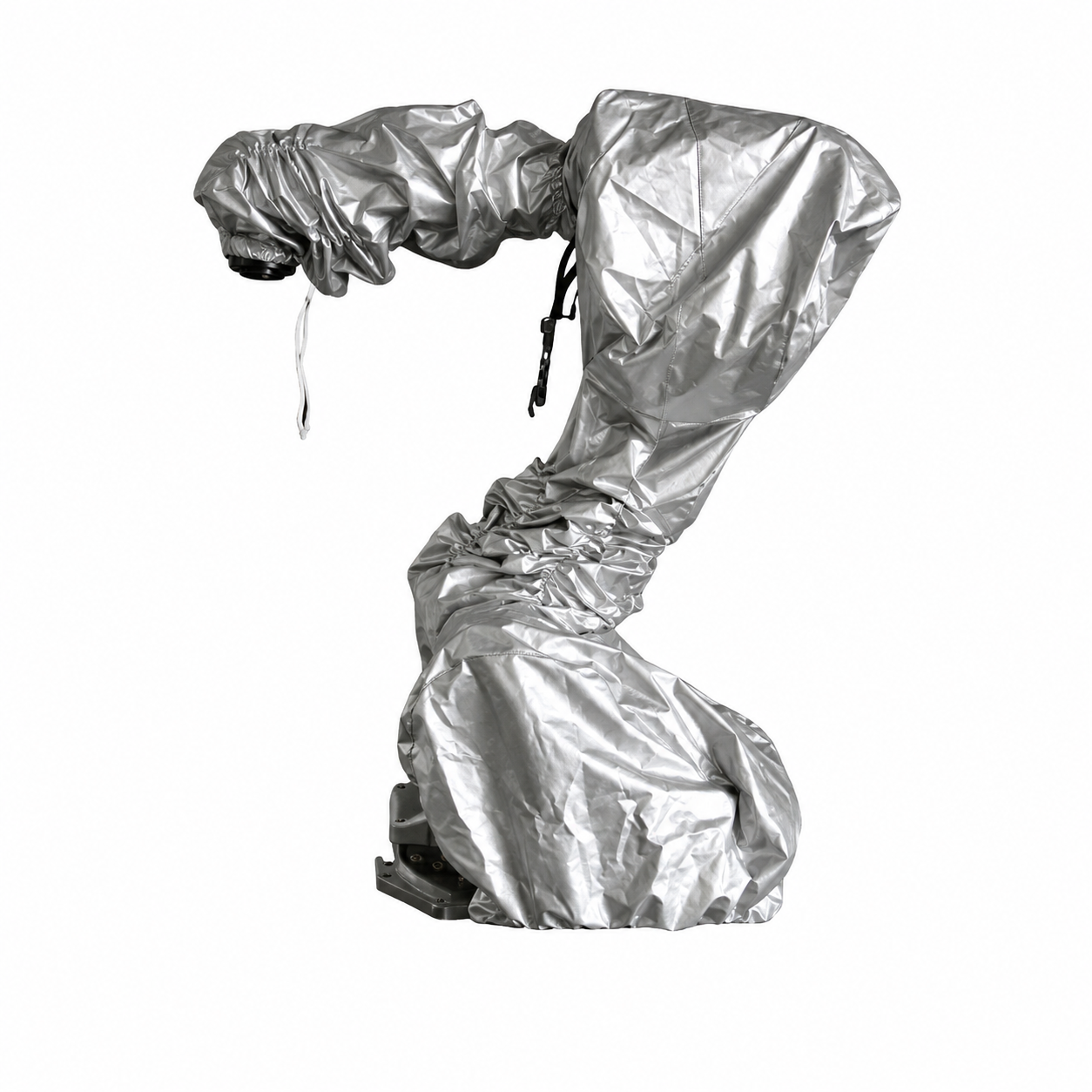
Separate the robot base, arm, wrist and tooling in the enquiry. Identify external cables and hoses as well: a body cover may need clearance around them without enclosing the entire dress pack. Mark which parts must remain accessible for inspection, lubrication, connectors and tool changes.
Use the full model suffix and mounting orientation. A floor-mounted arm, an inverted installation and a robot with a different tool can require different coverage even when the model family is similar. Include photographs from more than one side instead of asking the supplier to infer the hidden arrangement.
The Leisen Kawasaki BX300L cleaning-cover record is a supplier-listed configuration reference. It is not evidence that the same cover fits a BX300 without the suffix, or that a particular fabric resists every cleaning chemical.
Washing and painting require different questions
| Application | Information the supplier needs | What the quotation should resolve |
|---|---|---|
| Washing with detergents | Chemical identity, concentration, liquid temperature, exposure time and rinse process | Material compatibility and the proposed seam/closure construction |
| Directed or high-pressure cleaning | Pressure, nozzle type, stand-off distance and directions reaching the robot | Coverage of exposed seams, cuffs and openings; required validation |
| Painting and overspray | Coating chemistry, solvent exposure, deposition and replacement/cleaning method | Suitable fabric and construction for the stated process |
| Electrically sensitive or classified process area | Site requirements and the assessment supplied by the responsible specialist | Evidence applicable to the ordered cover, rather than an unsupported “antistatic” claim |
ASP's robot-cover guidance for stripping and cleaning processes illustrates why fabric choice, sealed seams and freedom of movement matter together. Its materials and claims apply to its own solutions; they must not be transferred to a Leisen or Qidun quotation.
The Qidun spray-painting cover listing includes an antistatic option. Treat that as a requirement to investigate with the supplier, not proof of a particular certification or suitability for a hazardous area. Have the site's responsible specialist review the relevant documentation.
A cover that fits at home may pull tight at full reach
Consider a fitting review in which the cover looks loose at the home position but the wrist cuff is pulled as the arm extends. The static photograph did not capture the working envelope. Adding more fabric everywhere is not necessarily the answer: excess material can also gather near tooling or moving joints.
Ask the machine team to provide approved reference positions representing the intended motion, including the relevant reach and wrist rotation limits. Identify where the cover is fixed and where fabric must move. A short recording from outside the safeguarded cell can help the cover maker understand the sequence; it does not replace the machine's commissioning procedure.
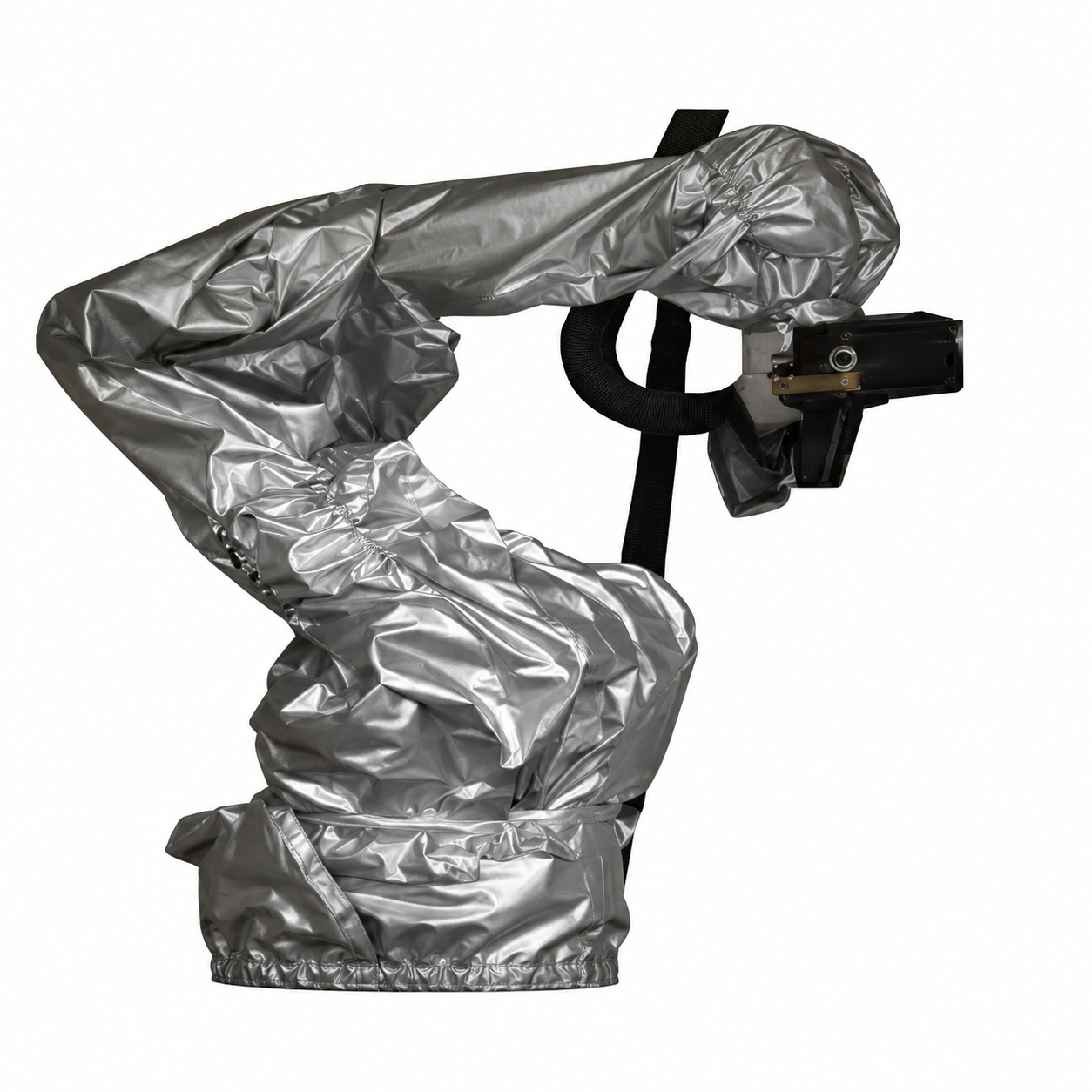
Use the wrist and tool-interface photograph to discuss opening locations, not to copy a seam pattern onto a different robot. The supplied cover should be defined by the agreed configuration and drawing.
Put the complete scope into the enquiry
| Information to send | Confirmation to request |
|---|---|
| Robot nameplate, full variant and mounting orientation | Exact robot/configuration covered by the quotation |
| Tool, flange and external hose/cable photographs | Coverage boundary and tool/wrist openings |
| Process conditions from the application table | Fabric selection and applicable limits |
| Working-envelope views and proposed fixing points | Cuff attachment, movement allowance and closure layout |
| Service points and required access frequency | Access flaps, removal method and maintenance restrictions |
| Quantity, required date and expected replacement method | Scope, fitting process, lead time and spare-cover arrangement |
Where a condition is unknown, write “to be confirmed” and identify who will supply it. Avoid accepting a quotation that substitutes a generic material description for the specified exposure without explaining the difference.
Agree the first-fit review before ordering multiples
For a new configuration, define how the first cover will be checked and how any fit correction will be handled. Have qualified site personnel confirm movement, clearance, attachment and access under the approved commissioning procedure. Inspect where the process can reach seams and openings, using an agreed validation method appropriate to the application.
Record the accepted cover revision, installation photographs and configuration so repeat orders have a reliable reference. Ask whether later tooling or hose-routing changes require a cover revision. This makes the repeat purchase more precise than sending the same robot model number again.
For your enquiry, use Discuss your requirements and send the full robot model, exposure details and photographs from the checklist. Read the technical analysis for more on movement and exposure boundaries.
Need help selecting? Send photos of the model, nameplate and installation; quantity may be unknown.
Related reading
Robot Protective Covers: Leakage Paths, Moving Cuffs and Material Claims
Understand why fabric performance does not establish whole-cover protection, and how seams, closures and wrist motion change the exposure.
Read article →