
Choosing a Pneumatic Gripper: Jaw Geometry, Pressure and Loss-of-Air Behaviour
Compare parallel and three-finger configurations using the actual part and fingers. Build an enquiry around force at the contact point, available pressure and the required release behaviour.
Need help selecting? Send photos of the model, nameplate and installation; quantity may be unknown.
Choose a pneumatic gripper from the part contact geometry and working conditions, then verify force and stroke using the proposed fingers. Nominal body size and upstream regulator pressure do not describe the complete gripping task.
Decide where the fingers can grip
Use the part drawing and real samples to identify the contact faces. Include tolerance extremes, machining variation, coolant or oil, and the space needed to approach and release. Two machined flats suggest a different contact arrangement from a round boss that needs centering.
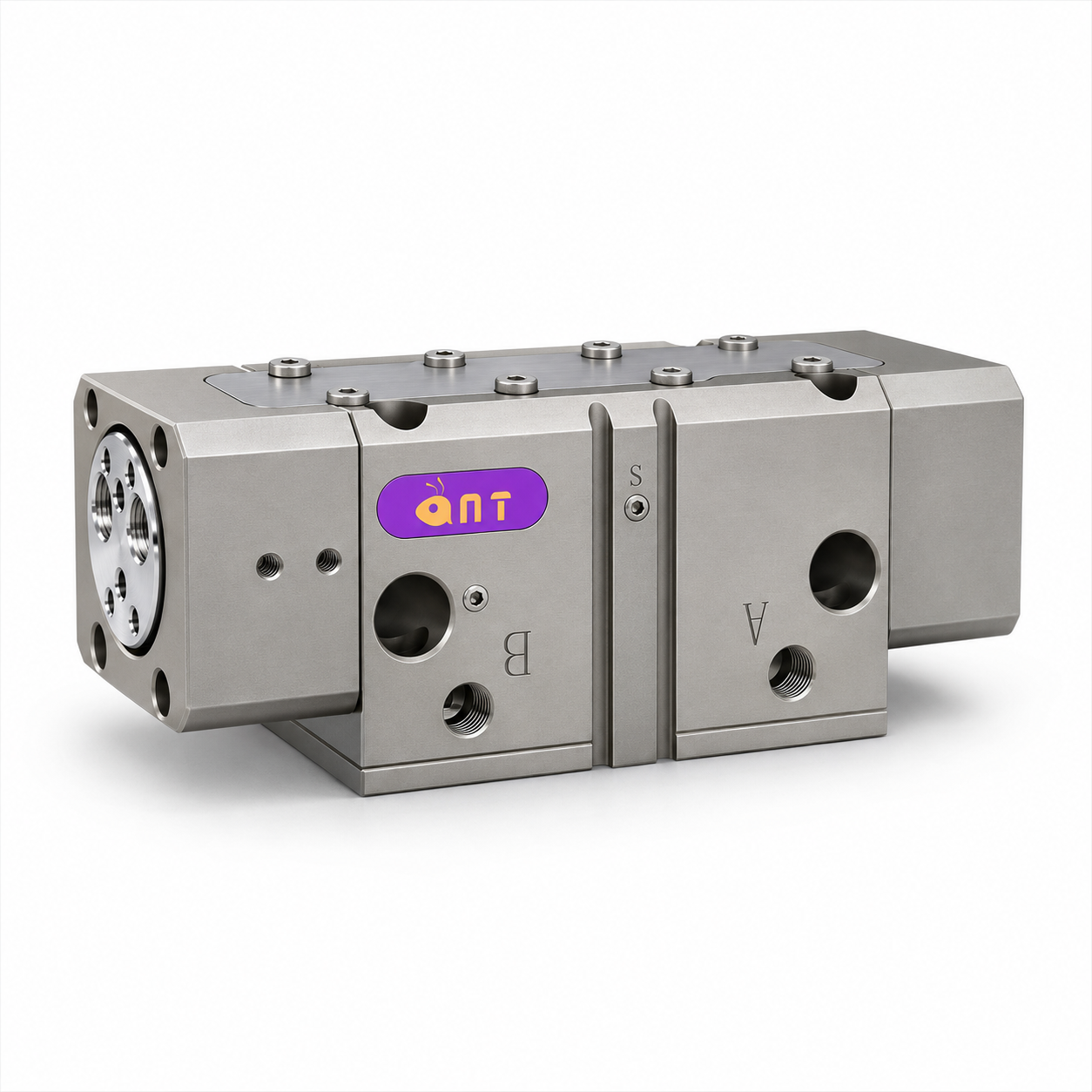
The ANT AGP80 is a parallel-gripper catalogue example; CPG-125-1 is a three-finger centering example. Compare them as different mechanisms, not interchangeable bodies of similar size. Confirm whether application fingers, sensors and fittings are included or must be specified separately.
| Selection question | Parallel candidate | Three-finger candidate |
|---|---|---|
| Contact geometry | Evaluate opposing flats or designed finger profiles | Evaluate suitable round geometry and centering requirement |
| Approach clearance | Check both fingers and the opening path | Check all three fingers around the part |
| Part variation | Verify minimum and maximum grip widths | Verify usable diameter range and finger contact |
| Release into fixture | Confirm fingers can withdraw without catching | Confirm surrounding tooling allows all fingers to clear |
Specify force at the proposed finger length
Send a finger drawing showing the contact point relative to the jaw base. Ask whether the manufacturer's force value is per jaw or total, whether it applies during opening or closing, and which pressure and finger length it assumes. Request the corresponding force and load information for your arrangement.
The machine team should determine the required holding performance from the part mass, acceleration, contact conditions and process forces. A wet sample may behave differently from a clean trial piece. Avoid assigning a universal friction factor or safety factor from a photograph.
Measure the air condition at the tool
Describe the available supply and have the pneumatic design checked for pressure at the gripper during operation, including other active valves. Tubing, valve capacity and the intended cycle can affect the delivered condition. Ask which sensors or signals distinguish part capture from an empty close.
The required behaviour after loss of air must be stated explicitly. A spring or retention option may exist without being included in the standard variant. Do not presume that a sealed housing means it retains the part when pressure disappears, or that “sealed” alone establishes suitability for the particular coolant and chips.
| Enquiry information | Confirmation required |
|---|---|
| Part drawing, mass and surface condition | Suitable contact approach and gripping range |
| Finger drawing and contact height | Force and allowable loads at those fingers |
| Working pressure, valve arrangement and cycle | Applicable operating conditions and accessories |
| Required behaviour on supply loss | Exact variant and limitations |
| Machine exposure and mounting | Material/protection suitability and interface |
Use representative maximum, minimum and difficult-to-release samples for the agreed commissioning trial. Include controlled placement, not just lifting: a part that sticks to a finger or catches a fixture can fail the process despite adequate holding force.
Keep the accepted finger revision with the gripper order code. Changing the fingers later can change the loading and contact conditions. Send both through Discuss your requirements for a meaningful quotation.
Product and technical references
- AGP80 Two-Finger Sealed Parallel Gripper
- CPG-125-1 Three-finger centering pneumatic gripper, standard
SCHUNK gripper force and finger-length data Catalog source for the example
Need help selecting? Send photos of the model, nameplate and installation; quantity may be unknown.
Related reading
Pneumatic Gripper Holding Margin: Pressure, Finger Reach and Contact Friction
Trace the difference between actuator force and a reliable grip, including pressure during closure, finger moments and the limits of a jaw-position signal.
Read article →